What Potholes Mean for Your Motorcycle Safety Gear in Malaysia
Table of Contents
ToggleSummary
- Potholes can disturb a motorcycle’s balance, direction and tyre contact, even at moderate speeds.
- Malaysian riders must wear an approved motorcycle helmet. A properly fitted full-face helmet also covers the chin and face.
- Motorcycle-specific jackets, trousers, gloves and boots can reduce abrasions, cuts and other soft-tissue injuries.
- Impact protectors may reduce force reaching certain body areas, but no gear can prevent every serious injury.
- Proper fit, secure fastening and genuine approval markings matter as much as the type of gear selected.
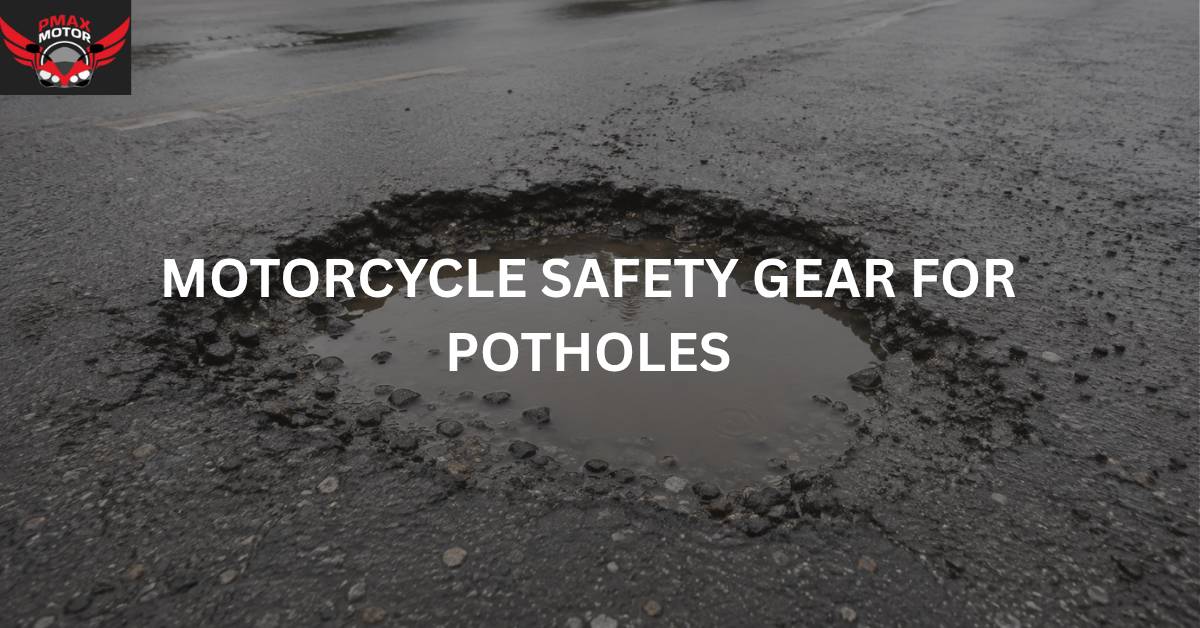
Potholes can turn a routine motorcycle journey into a serious crash within seconds.
If you ride a motorbike regularly, or even if you drive, you’ve probably noticed that Malaysia has a LOT of potholes. They’re as common as nasi lemak or durians, except much more dangerous.
A motorcycle helmet may protect the head, but a pothole-related fall can also expose the hands, shoulders, elbows, knees, hips, ankles and back.
Hence today, we will explain why potholes are dangerous, what motorcycle safety gear can do and what Malaysian riders should prioritise.
Why Are Potholes Dangerous for Motorcyclists?
Motorcycles rely on two relatively small tyre contact areas for stability. When one wheel suddenly drops, rebounds or shifts sideways, the rider may lose balance before correcting the movement.
A pothole impact may cause:
Front-Wheel Deflection: The wheel may turn or shift sideways, moving the handlebars unexpectedly.
Suspension Compression: A deep impact can compress the suspension rapidly and disturb balance.
Tyre or Rim Damage: Sharp edges may damage the tyre, bend the rim or contribute to pressure loss.
Reduced Traction: Water, gravel and broken road material may reduce grip.
Secondary Collisions: A rider who swerves or falls may enter another lane, hit a kerb or collide with another vehicle.
The outcome depends on speed, pothole size, tyre condition, surrounding traffic and rider input. Even a smaller pothole can be dangerous when encountered unexpectedly.
What Happens During a Pothole-Related Crash?
A rider may be thrown forward, fall sideways, twist an ankle or slide along the road.
Crash Movement | Body Areas Exposed | Relevant Gear |
Thrown forward | Head, face, hands and shoulders | Full-face helmet, gloves and jacket |
Falls sideways | Hips, knees, elbows and ankles | Riding trousers, jacket and boots |
Slides on the road | Palms, shoulders, knees and skin | Abrasion-resistant clothing and gloves |
Foot becomes trapped | Ankles, feet and lower legs | Motorcycle boots |
Back strikes the road | Back, ribs and shoulders | Armoured jacket and back protector |
Because riders cannot control how they will land, whole-body protection is more useful than relying on a helmet alone.
What Can Motorcycle Safety Gear Do?
Let’s be honest and say no motorcycle safety product can guarantee that a rider will avoid injury.
Motorcycle protective clothing is designed to address hazards such as abrasion, tearing and certain impacts.
“Jackets, trousers, gloves and boots made for motorcycle use can reduce abrasions, cuts and other soft-tissue injuries.”
Impact protectors are intended to reduce the force reaching particular body areas. However, they cannot prevent every fracture, spinal injury or internal injury.
Riders should choose equipment that:
- Is designed for motorcycle use
- Meets a recognised standard where applicable
- Covers the intended body area
- Fits securely without restricting control
- Keeps protectors correctly positioned
- Is practical for Malaysia’s heat and rain
Read More: How to Choose the Right Motorbike Tyres for Malaysian Roads
An Approved Full-Face Helmet
An approved, properly fitted and securely fastened helmet should be the first priority. Wearing an approved helmet is compulsory for motorcyclists in Malaysia.
A full-face helmet provides additional coverage for the chin and face compared with an open-face or half helmet. However, helmet style alone does not guarantee protection.
Check that the helmet complies with a standard recognised by Malaysia’s Road Transport Department, such as UN Regulation No. 22 or Malaysian Standard MS 1. Do not rely only on a seller’s use of terms such as “certified” or “safety approved.”
A suitable helmet should:
- Fit snugly around the head
- Remain stable when fastened
- Have a secure chin strap
- Carry genuine approval markings
- Be free from cracks or serious impact damage
A loose helmet may rotate during a crash. The chin strap should be fastened on every ride, regardless of distance.
A helmet involved in a crash or substantial impact should be inspected or replaced according to the manufacturer’s guidance, even if the outer shell appears undamaged.
An Armoured Motorcycle Jacket
A motorcycle jacket should provide more than protection from wind and rain.
Look for abrasion-resistant construction, shoulder and elbow protectors, and secure closures that keep the armour in position. For Malaysia’s warm climate, ventilated textile or motorcycle mesh jackets may provide a practical balance between airflow and protection.
A hoodie, casual jacket or thin raincoat is not a substitute because it is not designed to resist road abrasion or manage motorcycle crash impacts.
Riding Gloves
Hands are often among the first body parts to reach the road during a fall.
Motorcycle gloves should have reinforced palms, secure wrist closures, durable stitching and enough flexibility to operate the controls comfortably.
Loose gloves may come off during a slide, while bulky gloves can interfere with control. Test them while gripping a handlebar rather than with relaxed hands.
Riding Trousers and Knee Protection
Ordinary jeans may feel durable, but standard denim is not designed specifically for motorcycle crashes.
Motorcycle riding jeans and textile trousers may combine abrasion-resistant materials with knee and hip protectors.
Properly fitted knee guards can provide localised impact protection, but they do not offer the same abrasion coverage as full riding trousers. They must remain securely positioned over the knees while riding.
Motorcycle Boots
Pothole-related crashes can expose the ankles and feet to twisting, impact and abrasion.
Suitable riding boots should cover the ankles, have secure fastenings, provide heel and toe reinforcement and use a firm, slip-resistant sole. They should also allow normal braking and gear changes.
Sandals, slippers and loose shoes provide little meaningful protection and may come off during a fall.
Back and Chest Protection
A suitable back or chest protector is designed to reduce force transmitted in certain impacts.
It cannot prevent every spinal, rib or internal injury. Choose a protector intended for motorcycle use, check for a recognised standard and ensure it stays securely positioned.
Back and chest protectors add protection but should not replace an abrasion-resistant riding jacket.
What Should Malaysian Riders Prioritise?
Begin with an approved, properly fitted helmet because helmet use is compulsory and head injuries can be life-threatening.
After that, add motorcycle-specific protection for the hands, upper body, legs, feet and ankles as soon as practical.
A useful setup may include:
- Approved full-face helmet
- Armoured motorcycle jacket
- Motorcycle gloves
- Ankle-covering boots
- Protective riding trousers
- Back or chest protector
There is no universal purchasing order after the helmet. Daily distance, usual speed, road conditions, budget and existing gear should guide the decision.
It is generally better to buy one genuine, properly fitted item at a time than a full set of imitation or uncertified equipment.
Does Expensive Gear Always Offer Better Protection?
Not necessarily.
Higher-priced equipment may use stronger materials, better ventilation or more comfortable designs, but price alone does not guarantee protection.
Assess:
- Approval or certification
- Coverage
- Fit
- Construction
- Authenticity
- Comfort
A premium jacket that fits poorly may allow the protectors to move away from the joints. A correctly fitted mid-range item may offer better practical value.
How Should Motorcycle Gear Fit?
Protective gear should stay in position during riding and sudden movement.
Helmet: Snug around the head and cheeks, with limited movement when fastened.
Jacket: Shoulder and elbow protectors aligned with the joints while the arms are bent.
Gloves: Fingers reaching the ends, with secure wrist closures.
Trousers: Knee protectors covering the kneecaps while seated.
Boots: Feet and ankles held securely without affecting braking or gear changes.
Try on equipment in a normal riding position. An item that fits while standing may shift once the knees are bent and arms are extended.
Common Gear Mistakes
Common mistakes include:
- Leaving the helmet chin strap unfastened
- Using a loose, cracked or damaged helmet
- Buying equipment with unclear approval markings
- Wearing armour that shifts away from the joints
- Using ordinary gloves instead of motorcycle gloves
- Riding in slippers or sandals
- Treating a raincoat as protective riding gear
- Assuming short journeys do not require proper protection
- Continuing to use damaged gear after a crash
A pothole does not become less dangerous because the journey is short.
Choosing Gear for Malaysia’s Weather
Malaysia’s heat, humidity and rain can make protective equipment uncomfortable, so riders should choose gear they can wear consistently.
Hot Conditions: Look for ventilated jackets, breathable gloves and moisture-managing inner layers.
Heavy Rain: Wear waterproof outer layers over protective clothing rather than replacing it with a thin raincoat.
Night Riding: Reflective or high-visibility details may improve visibility, but riders should also maintain working lights and use sensible road positioning.
Daily Commuting: Choose gear that is easy to fasten, clean, store and wear repeatedly.
Dry wet equipment according to the manufacturer’s instructions. Avoid storing gear while soaked or exposing it to direct high heat unless permitted.
When Should Gear Be Replaced?
Replacement or assessment may be necessary when:
- A helmet has been involved in a serious impact
- Helmet straps, buckles or padding are damaged
- A helmet shell is cracked or deformed
- Jacket or trouser seams are torn
- Protectors are cracked or no longer stay in place
- Gloves have worn palms or weak closures
- Boots have split soles or damaged ankle support
Follow the manufacturer’s care and replacement guidance. There is no single lifespan that applies to every product.
After a crash, inspect all equipment carefully because damage may not be limited to the first area that contacted the road.
Can Safety Gear Prevent Every Pothole Injury?
No motorcycle safety gear can prevent every injury, especially in severe or high-speed crashes.
Properly designed and fitted equipment can reduce abrasion, cuts and some impact forces. However, it cannot eliminate the risk of fractures, internal injuries, spinal trauma or head injury.
Protective gear works best alongside sensible riding habits and a well-maintained motorcycle.
Riders should also:
- Maintain a suitable speed
- Leave enough following distance
- Keep tyres properly inflated and in good condition
- Ride cautiously in rain or poor visibility
- Scan ahead for standing water and road damage
Protective gear is the final layer of defence when a crash cannot be avoided.
Conclusion
Potholes can disturb a motorcycle’s direction, suspension and tyre contact, exposing the rider to a fall or secondary collision.
Malaysian riders should begin with an approved, properly fitted and securely fastened helmet. A full-face design provides additional chin and facial coverage.
Motorcycle-specific jackets, gloves, boots and protective trousers should then be added as soon as practical.
Protective clothing can reduce abrasions, cuts and some other injuries, but it cannot eliminate the risk of serious harm. Safe speeds, good tyres, adequate following distance and extra caution in rain or poor visibility remain essential.
PMAx Motor supplies motorcycle helmets, riding gear and motorcycle accessories in Malaysia. Before purchasing, riders should confirm each item’s approval marking, certification, fit, condition and intended use.
Disclaimer: This guide provides general safety information and does not replace professional medical advice, rider training or product-specific instructions.
Frequently Asked Questions About Potholes and Motorcycle Gear
What Is the Most Important Motorcycle Safety Gear for Potholes?
An approved, properly fitted and securely fastened helmet is the first priority and is legally required in Malaysia. A full-face design also covers the chin and face.
Can a Pothole Cause a Crash at Low Speed?
Yes. A deep or sharp pothole can disturb the front wheel, tyre contact or balance of a motorcycle even at relatively low speed.
Are Normal Jeans Enough for Motorcycle Riding?
Ordinary jeans provide limited protection and may tear or wear through during a slide. Motorcycle riding jeans with abrasion-resistant materials and knee or hip protectors provide more purpose-built protection.
Should I Replace My Helmet After Hitting a Pothole?
Riding over a pothole does not normally require helmet replacement if the helmet was not struck or damaged. Follow the manufacturer’s guidance if it hit the road or sustained a substantial impact.
Are Knee Guards Useful for Daily Riders?
Properly fitted motorcycle knee guards can provide localised impact protection, but they do not offer the same abrasion coverage as protective riding trousers.
Is a Full-Face Helmet Better for Pothole-Related Crashes?
A full-face helmet provides additional chin and facial coverage compared with an open-face helmet. Protection also depends on approval, fit, secure fastening and condition.