
RON95 Subsidy Cap: Is 200L Enough for Riders?
Table of Contents
ToggleSummary
- Most ordinary riders are unlikely to exceed 200L monthly.
- Full-time gig riders and high-mileage users are the main concern.
- Large commercial fleets already have separate systems like SKDS (Sistem Kawalan Diesel Bersubsidi).
- Daily commuting distance matters more than bike size alone
- MOF estimates petrol + diesel subsidies at around RM3 billion/month when Brent was about US$90/barrel, rising to around RM4. billion/month when Brent hit about US$100/barrel.
Fuel subsidy discussions are heating up again in Malaysia, especially with global oil prices becoming unstable due to Middle East tensions and fears surrounding supply disruptions.
For riders though, the concern is “Is 200L actually enough for daily riding?”
Online, the reactions have been quite mixed. Some riders are saying: “200L is a lot weh.”
Others are saying: “Bro, delivery riders can burn through that fast.”
Honestly, both sides are technically correct because it really depends on fuel usage.
A university student riding around Subang is very different from a Foodpanda rider doing full-day shifts across KL traffic every day.
Hence our question of is 200L enough for riders is more for food for thought. Let’s talk about it.
How Much Does 200L Actually Stack?
Under BUDI95, eligible Malaysians get subsidised RON95 at RM1.99/L, and the monthly subsidised quota is now 200 litres (from 300L previously), effective 1 April 2026.
Yet most riders do not think in litres, because 200L is hard to visualize.
Instead they think in:
- RM10 or RM20 petrol top-ups
- Daily commute distance
- How often they stop at petrol stations
- If the fuel warning light suddenly appears during a traffic jam
So let’s simplify things.
A kapcai can be very fuel efficient. Some manufacturer claims can go very high in ideal conditions (example: Honda Wave Alpha marketed at around 71 km/L under test/claim conditions). –Boon Siew Honda
That means:
- 200L could theoretically cover around 8,000km to 10,000km monthly
- Even with less efficient riding, many bikes could still manage over 6,000km
On paper, that sounds huge.
But Malaysian riding conditions are rarely “on paper”.
Traffic jams, stop-start riding, rain, carrying cargo, and long-distance commuting all affect fuel usage.
If your bike averages roughly 45–70 km per litre (varies a lot by traffic + riding style), then:
- 200L ≈ 9,000 to 14,000 km/month (rough range)
To exceed 200L, you basically need very high mileage.
But once riders move beyond the subsidised quota, they face much higher market-linked fuel prices depending on future government policy and oil market conditions.
|
Extra Fuel Beyond 200L |
Example Market Price (RM4/L) |
Estimated Extra Monthly Cost |
|
50L |
RM4.00/L |
Around RM100 |
|
100L |
RM4.00/L |
Around RM200 |
|
150L |
RM4.00/L |
Around RM300 |
Different Riders, Different Fuel Reality
|
Rider Type |
Estimated Monthly KM |
Estimated Fuel Usage |
Likely Within 200L? |
|
Casual rider |
300-800km |
10-20L |
Easily yes |
|
Office commuter |
800-1500km |
20-40L |
Yes |
|
University student |
500-1200km |
15-30L |
Yes |
|
Part-time gig rider |
1500-3000km |
40-80L |
Usually yes |
|
Full-time p-hailing rider |
3500-7000km |
90-220L |
No |
|
Rural long-distance rider |
3000-5000km |
80-140L |
Possibly tight |
|
Big bike rider |
1500-3500km |
70-180L |
Depends heavily |
For most normal riders, 200L is honestly difficult to exceed.
But for riders using motorcycles as part of their income like couriers or food delivery riders, the margin becomes much tighter.
The Factor Is Actually Distance
A lot of people assume bigger bikes automatically mean higher fuel usage but commuting distance matters much more.
Someone riding a small 135cc bike for:
- 80km
- 100km
- or even 150km daily
May end up using far more fuel monthly than someone casually riding a larger bike on weekends.
In some areas of Johor, Kedah, Sabah, Sarawak, or Kelantan, long-distance riding is simply normal daily life and when you factor in bumpy or poorly maintained roads, the extra fuel usage adds up.
Gig Riders Are A Different Category Altogether
Malaysia is already treating high-mileage commercial riders differently from ordinary consumers.
Under the BUDI95 subsidy structure, eligible e-hailing and gig economy drivers may receive higher subsidised fuel allocations based on verified mileage and usage patterns.
MOF has outlined tiered eligibility such as:
- Basic 300L under 2,000 km
- 600L for 2,000–5,000 km
- Up to 800L above 5,000 km
That means the government already recognises full-time commercial riders operate very differently from casual commuters.
The “Grey Zone” Riders May Feel The Most Pressure
The riders most likely to feel uncertain are:
- Part-time delivery riders
- Informal runners
- Riders juggling multiple apps
- Semi-full-time gig workers
- People not fully registered under official systems
Why?
Because:
- Casual riders usually stay well below 200L
- Large commercial fleets already have separate systems like SKDS
The squeezed middle is where uncertainty happens.
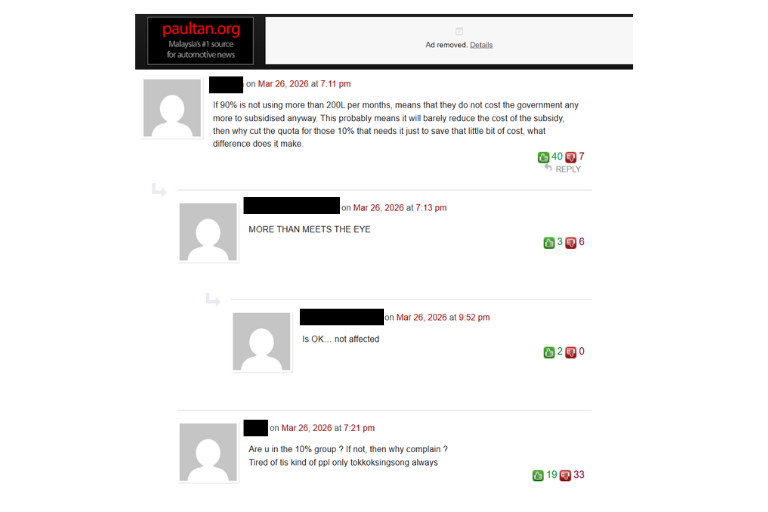
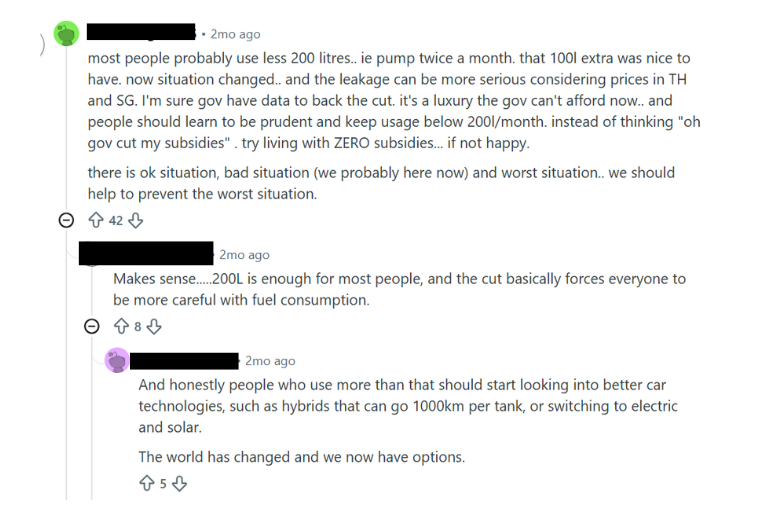
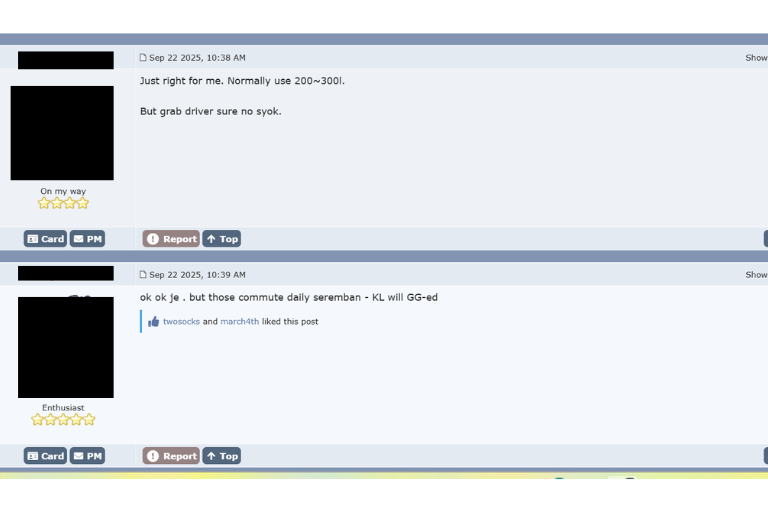
What Malaysians Say About the 200L Quota
So, Is 200L Actually Enough?
For most ordinary riders, probably yes. For high-mileage commercial riders, not so much.
The answer depends heavily on:
- How far you ride daily
- Whether your bike is tied to income
- Traffic conditions
- Riding frequency
- Bike efficiency
- Commuting patterns
A casual rider in PJ may barely use 20L monthly but a hardcore full-time delivery rider in KL could burn through over 150L very quickly.
Conclusion
The RON95 subsidy cap debate is not really about litres alone. For many riders, it reflects bigger concerns about rising living costs, fuel uncertainty, and whether daily commuting is becoming more expensive over time.
For most normal riders, 200L is likely still manageable
But for Malaysians relying heavily on motorcycles for income or long-distance commuting, the conversation becomes much more difficult, especially as fuel policies continue evolving alongside global oil pressures.
This opinion piece on RON 905 subsidy was brought to you by PMAX motor, the leading online helmet motorcycle seller in Malaysia.
Source:
- Ministry of Finance (MOF) — Siaran Media (26 Mar 2026): BUDI95 quota adjusted to 200L/month effective 1 April 2026, price RM1.99/L, and MOF’s estimates of petrol+diesel subsidy burden ~RM3b/month (Brent ~US$90) and ~RM4b/month (Brent ~US$100).
- Ministry of Domestic Trade and Cost of Living (KPDN) — SKDS / Fleet Card info page: Confirms SKDS (Sistem Kawalan Diesel Bersubsidi) and related programme administration (MySubsidi / fleet card context).
- Ministry of Finance (MOF) — Press Citations (4 Nov 2025): MOF-cited tiered BUDI95 eligibility for e-hailing drivers: 300L (<2,000 km), 600L (2,000–5,000 km), 800L (>5,000 km).
- Boon Siew Honda (Official distributor product page): Manufacturer marketing claim for Honda Wave Alpha ~71 km/L (claim/test conditions).
Frequently Asked Questions About RON95 Subsidy Cap
Is 200L Enough For Most Malaysian Riders?
For most casual riders and normal commuters, 200L is generally considered more than enough for monthly riding needs.
Which Riders Are Most Likely To Exceed 200L?
Full-time delivery riders, p-hailing riders, and high-mileage long-distance commuters are more likely to approach or exceed higher fuel usage levels.
Do Gig Riders Receive Additional Fuel Subsidies?
Malaysia has discussed and implemented separate subsidy mechanisms and higher quota structures for certain verified commercial transport and e-hailing users.
Does Traffic Affect Motorcycle Fuel Usage?
Yes. Heavy stop-start traffic, idling, and frequent acceleration can significantly reduce real-world fuel efficiency.
Does A Bigger Bike Automatically Mean Higher Fuel Usage?
Not always. Daily riding distance and frequency often matter more than engine size alone.
Why Is Malaysia Tightening Fuel Subsidies?
Rising global oil prices and increasing subsidy costs are putting pressure on the government’s long-term fuel spending.